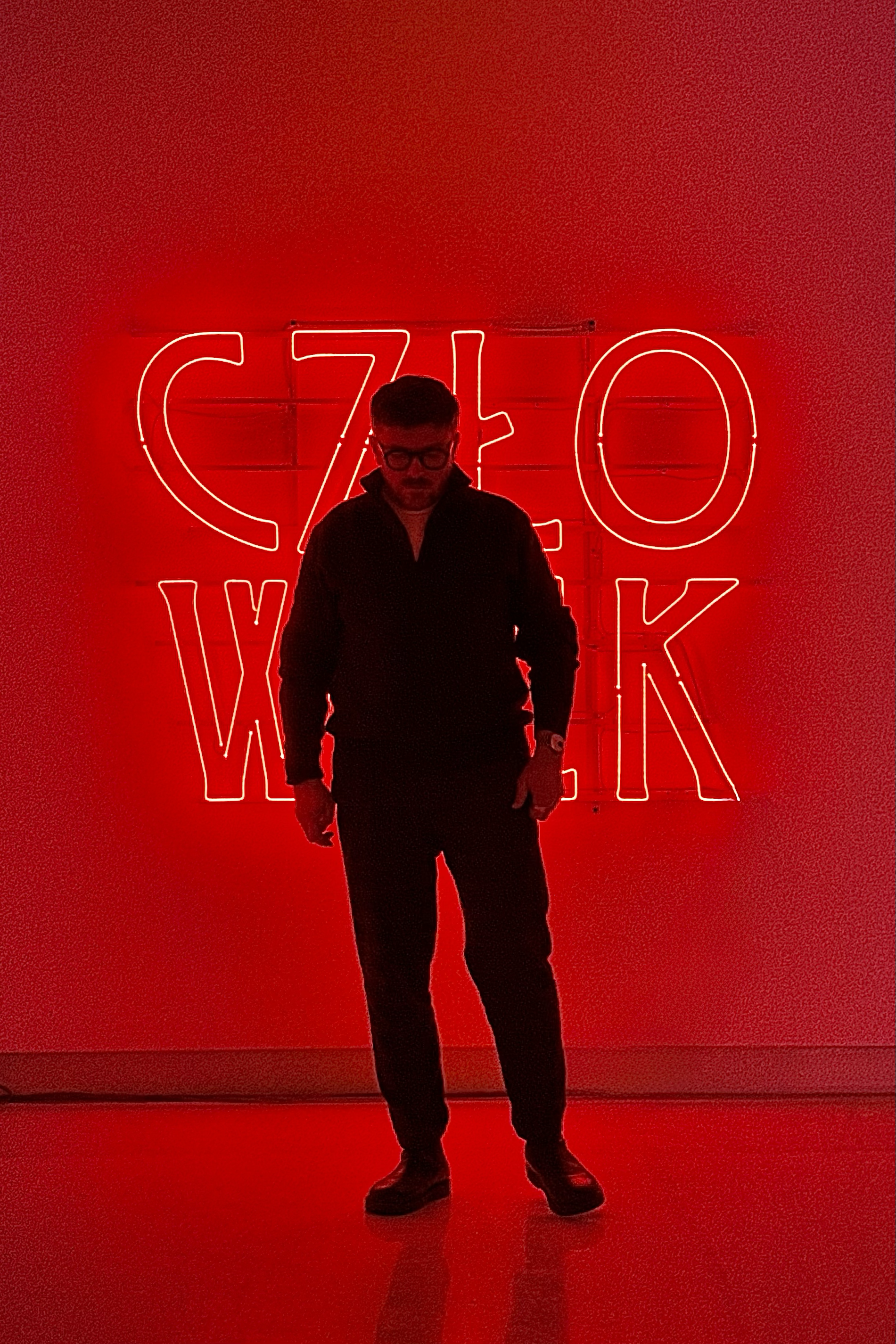
I am Marcin Wesołowski, a contemporary artist working at the intersection of iconic imagery, folklore, and personal mythology.
My practice draws from the visual languages of sacred art, folk traditions, and historical narratives, not as belief systems, but as cultural structures that have shaped how humans make meaning.
I am particularly drawn to the symbolic power of religious iconography: its clarity, repetition, and emotional density. Though I am not religious, these images remain deeply human to me, charged with longing, fear, care, irony, and hope.
Travel has been a formative force in my work, sharpening my sensitivity to how different cultures encode similar human experiences through distinct visual grammars. Beneath this global perspective lies a strong local current: the Carpathian region, with its mystical folklore, woodcut aesthetics, animal symbolism, and quiet spirituality, continues to inform my visual imagination.
Alongside my artistic practice, I work closely with people as a mentor, educator, and through ongoing therapeutic training. Much of my daily life is shaped by listening: to stories, tensions, hesitations, unspoken meanings.
When I close the door to my art room, I enter a different state. Solitude becomes absolute. In that quiet, voices return, not of individuals, but of places, memories, symbols, and half-remembered narratives. Creation becomes a form of listening turned inward.
Formally, my work often moves toward reduction: simple lines, limited palettes, distilled gestures allowing space for ambiguity and layered interpretation. Figures recur: saints without doctrine, devils without condemnation, animals as mirrors, old men as witnesses. These are not characters, but states of being.
Alongside my artistic life, I navigate the worlds of business and academia, where structure, responsibility, and decision-making are ever-present. Rather than opposing creativity, these experiences sharpen it. They inform my interest in boundaries, balance, and the fragile meeting point between order and vulnerability.
My work is not about answers. It is about presence.
A visual meditation on the human condition, where history, imagination, tenderness, and doubt meet.